
"instant coffee China"
2000 article(s) found

Research on Market Evaluation and Investment Planning of China's Coffee and Beverage Industry from 2016 to 2020
The "Research report on Market Evaluation and Investment Planning recommendations of China's Coffee and Beverage Industry from 2016 to 2020" released by Booz data introduces the relevant overview of the coffee and beverage industry, the operating environment of China's coffee and beverage industry, and analyzes the current situation of China's coffee and beverage industry, the competition pattern of China's coffee and beverage industry, and the operation of key enterprises in China's coffee and beverage industry.

Shutting down the factory and stopping the production of Maxwell coffee lost to China.
Maxwell, a giant instant coffee, has recently been revealed to have closed its factory and stopped production in China. Maxwell once rose to prosper in the domestic instant coffee market, and even split the world with Nestl é in some stores. After the news of its defeat in China, it aroused widespread concern in the industry. Behind Maxwell's shutdown, the entire instant coffee market is no longer what it used to be. Maxwell Coffee Guangzhou Factory
Ready-to-drink coffee is about to exceed 150 billion yuan in China's coffee market.
More and more young people like to drink coffee, and different types of products such as instant, freshly ground and ready-to-drink all occupy a corner of the market. However, with the acceleration of people's pace of life, the data show that the scale of instant coffee in China's coffee market is about to exceed 150 billion yuan, and the destruction of several hundred tons of instant products by Nestl é can also show that the layout and trend of the coffee market are changing from the side. At present, each

Analysis and Thinking of Coffee Market in China
China's coffee market capacity In 2012, China's current coffee consumption was about 80 billion yuan, and the world coffee market consumption market size in 2012 was less than 12 trillion yuan, slightly lower than the consumption scale in 2011. China's coffee consumption market has grown rapidly in the past 10 years, and the annual market growth rate is more than 15%, which is rare in the world.

What is instant coffee? Instant coffee is a drink or coffee instant coffee market is still hot
Under the continuous impact of coffee culture, the knowledge of fine coffee has been gradually popularized, coupled with the gradual increase of their own roasted coffee stores, the distance between coffee and ordinary consumers is getting closer and closer, coffee has become everyone's daily drink. At present, coffee on the market is mainly divided into four product lines, including instant coffee, instant coffee, freshly ground coffee and fine coffee.
China Coffee Network tells you the history of instant coffee the development of instant coffee Nestle Coffee Company
In 1901, instant coffee, which can be drunk by adding hot water, was invented in Chicago by SatoriKato, a Japanese-American chemist. In 1906, British chemists invented the technology for mass production of instant coffee. Washington, who was living in Guatemala, observed dry coffee on coffee cups. After experiments, he created RedE Coffee and entered the market in 1909.

Drink doves to quench thirst! Yunnan's "high-end" instant coffee drinks attempt to seize the domestic coffee market
Professional baristas Please follow the Coffee Workshop (official Wechat account cafe_style). Not long ago, the local coffee brand Xinruike in Yunnan Province, a new instant coffee Mata Star, was listed in Guangzhou. It is reported that at present, Xinruike Mata Star series of new products have been put on sale in many first-tier retail supermarkets. According to statistics, the annual growth rate of coffee consumption in China is about 25%, which is much higher than the global growth rate of 2%.

Great potential for the development of coffee market-the development of coffee market in China
As a leader in the coffee market, Nestle Coffee has been developing in China's coffee market since the 1980s. But at the beginning of this year, Nestle Coffee in Dongguan destroyed a batch of hundreds of tons of instant coffee, which Nestl é explained that the destruction was only to destroy stocks. At present, the Guangdong market is still in the stage of recovery, but Nestle's approach first ensures
Is Nestl é too optimistic about instant coffee and a drag on mergers and acquisitions?
In February 2015, nearly 400 tons of unexpired Nestle coffee was destroyed in Dongguan, Guangdong, with a market value of nearly 10 million. Nestl é officials responded that the move was to keep products fresh and destroy stocks. The dumping of instant coffee by Nestl é (China) Co., Ltd. (hereinafter referred to as Nestle China) is the largest destruction of instant coffee since the factory was established in 1992. Xu Xiongjun, an expert on strategic positioning of food and beverage, believes that
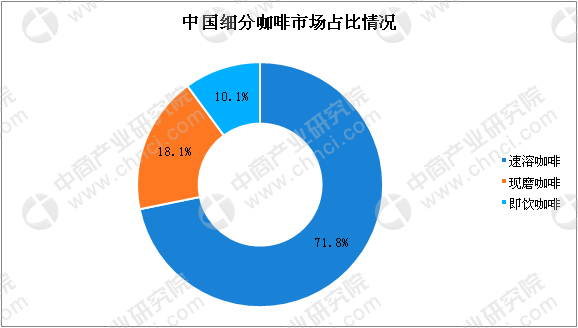
Annual data Analysis and Forecast of China's Coffee Market: instant Coffee Market share exceeds 70% (figure)
Professional coffee knowledge exchange more coffee bean information please follow the coffee workshop (Wechat official account cafe_style) China Business Intelligence Network News: with the improvement of our people's living standards and growing awareness of coffee culture, coupled with the huge demographic dividend, stimulate domestic coffee consumption. At present, China's coffee market is entering a stage of rapid development.
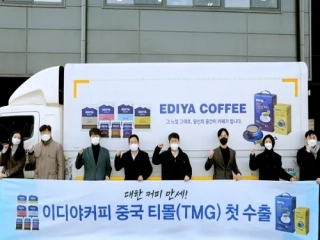
South Korean boutique coffee chain Ediya Coffee once again entered the Chinese market, stationed in Tmall to sell instant coffee!
South Korean coffee chain EDIYACOFFEE has announced that it will enter China's Tmall platform within January, Yonhap news agency reported. Prior to this, EDIYACOFFEE has already stepped out of South Korea, exporting its brand of instant solution to Mongolia, Australia, the United States and other countries.
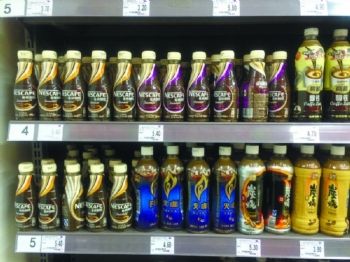
Ready-to-drink Coffee Market: a New Blue Ocean being excavated
In the past two years, when the whole beverage industry bid farewell to the golden era of high growth, coffee consumption showed a rapid growth trend, and China's coffee market is growing at an annual rate of 15% and 20%. Both the leisure coffee chain represented by Starbucks and the instant coffee represented by Nestl é have made rapid development. And the scale of China's coffee consumption market is about to break through.
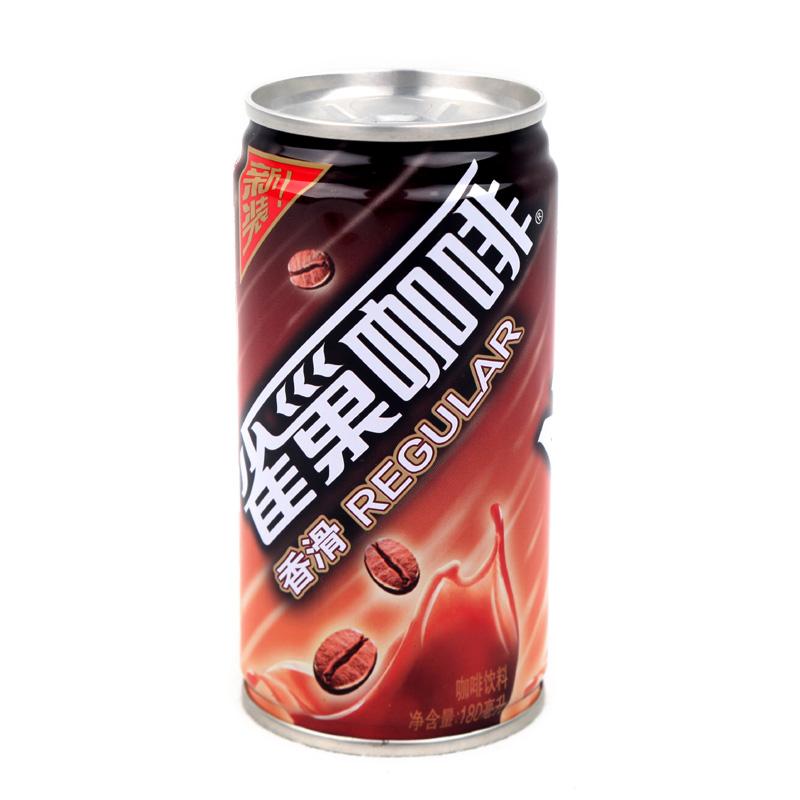
Last year's poor performance, why did Nestl é pour out the coffee?
In the 1980s, Maxwell and Nestle, two major instant coffee brands, were almost the forerunners of Chinese mainland coffee enlightenment education. But the coffee market is no longer just owned by Nestl é and Maxwell. Under pressure from many coffee products to carve up the market, Nestl é destroyed nearly 400 tons of unexpired instant coffee in February. The production capacity is ahead of the consumption capacity, and Nestle dissolves coffee.
Analysis of China Coffee Consumption Market in 2015
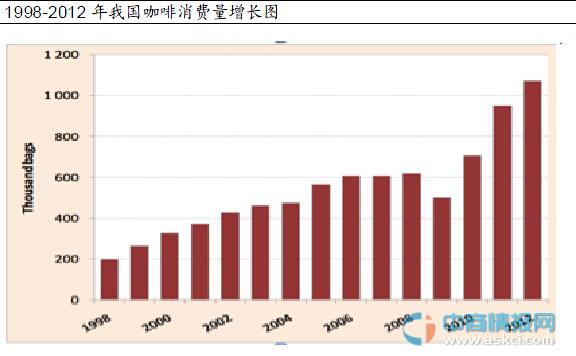
1. Changes in coffee drinking volume and drinking structure in China: compound 13% growth, instant-ready to drink-fresh grinding From 1998 to 2012, coffee consumption in China increased from 199,000 bags to 1.1 million bags, with an annual growth rate of about 12.8%. China has a population of about 1.3 billion, and coffee consumption has risen from 9.6 grams to 47.6 grams, with an average annual growth rate of about 12.1%. If the growth rate of 12.8% is maintained, the deadline

From instant noodles to coffee brewing, the transformation of consumption concept has spawned new growth points in China
Shoppers in the world's second-largest economy are getting richer and older: instant coffee is giving way to brewed coffee, boutique beer is gaining popularity, and the halo of mainstream beauty products is being replaced by more expensive products. Meanwhile, instant noodle sales are declining. Morgan Stanley (32.9, -0.03, -0.09%) and London-based market research firm Mintel Group Ltd.

The upgrading of consumption forces the upgrading of products and the transformation of instant coffee into high-end coffee is imperative.
Professional coffee knowledge exchange more coffee bean information please follow the coffee workshop (Wechat official account cafe_style) Information Times reporter Liu Fang as a product that has accompanied a generation of growth, the popularity of instant coffee has begun to decline. Recently, relevant data reports show that in China, the number of people who drink instant coffee is gradually decreasing, and the growth rate of its market is slowing down. Experts say that with the consumption market
The crisis of eliminated instant coffee Nestle coffee
McDonald's sells coffee, KFC sells coffee, Haagen-Dazs sells coffee, even clothing brand attachment has opened a cafe of the same brand, and Starbucks is still desperately expanding. As a result, Nestl é, the largest brand in the Chinese instant coffee market, destroyed hundreds of tons of instant coffee near its expiration date at a coffee factory in Dongguan in January and February this year. The appearance of Nestl é China Public Relations Department
Spread and Development of Coffee in China
The history of the introduction of coffee into China is not long, and it was not until 1884 that coffee was first planted in Taiwan Province. In the mainland of the motherland, the earliest coffee cultivation began in Yunnan. At the beginning of the 20th century, French missionaries brought the first batch of coffee saplings to Binchuan County, Yunnan Province, and began to grow coffee in the mainland.

Maxwell insists that it is difficult for a single product to turn around and the countdown to factory closure in China has entered.
Shutting down to reduce fixed costs No. 3 Jiaoyuan Road, Guangzhou is Maxwell's only production plant in China. Now there is no longer the original hustle and bustle, and it is difficult to find the original international coffee giant. In July 2015, the owner of the factory just changed from Mondelez International to Guangzhou Zhenyin Coffee Co., Ltd. Although Maxwell used to be one of the four largest coffee manufacturers in the world, it was last year

Instant coffee encounters challenges Can new products such as capsule coffee help Nestle?
Coffee is coming home. Juerg Zaugg, Nestle SA's director of agricultural services for Greater China, holds a cup of Dolce Gusto Yunnan limited edition espresso coffee and banters with local coffee farmers at a coffee farm in the mountains of Puwen Town, Xishuangbanna Dai Autonomous Prefecture, Yunnan Province. In September this year, a limited edition of Yunnan local coffee beans